

For businesses in Salt Lake City, corrugated packaging is part of daily operations. Products arrive in boxes, orders ship out in boxes, and cardboard builds up quickly across warehouses and distribution centers. Without a clear system in place, managing that volume can become a challenge.
That is where recycling in Salt Lake City becomes essential. With the right approach, businesses can handle bulk cardboard efficiently while keeping operations organized and materials in use.
Why Bulk Cardboard Recycling Matters
In high-volume environments, cardboard is more than occasional waste. It is a constant output tied directly to how a business operates.
Facilities that prioritize recycling in the Salt Lake City area can:
Keep workspaces clear and efficient
Reduce clutter in high-traffic areas
Improve safety on warehouse floors
Minimize waste sent to landfills
Support sustainability goals across operations
Recycling helps turn used cardboard into a manageable resource instead of a growing operational issue.
Understanding Bulk Cardboard in Commercial Settings
Bulk cardboard typically comes from corrugated packaging used in shipping and storage. This includes:
Shipping boxes
Corrugated sheets
Packaging inserts
Large volume product containers
These materials, often referred to as OCC (Old Corrugated Containers), are highly recyclable and can be reused multiple times to create new packaging.
Businesses that participate in Salt Lake City recycling efforts help make sure this material stays in circulation rather than being discarded or sent to landfill.
Setting Up an Efficient Cardboard Recycling System
Creating a reliable recycling process starts with understanding how cardboard moves through your facility.
1. Identify Key Collection Points
Look for areas where cardboard accumulates most often, such as:
Receiving docks
Packing stations
Production areas
Placing recycling collection stations in these locations makes it easier for teams to dispose of materials properly.
2. Establish Clear Collection Areas
Designated recycling zones help keep cardboard organized and prevent it from mixing with general waste. Clear signage and easy access encourage consistent use.
3. Prepare Cardboard for Recycling
Flattening boxes reduces the amount of space they take up and makes handling easier. Keeping materials clean and dry is also important to ensure they can be processed effectively.
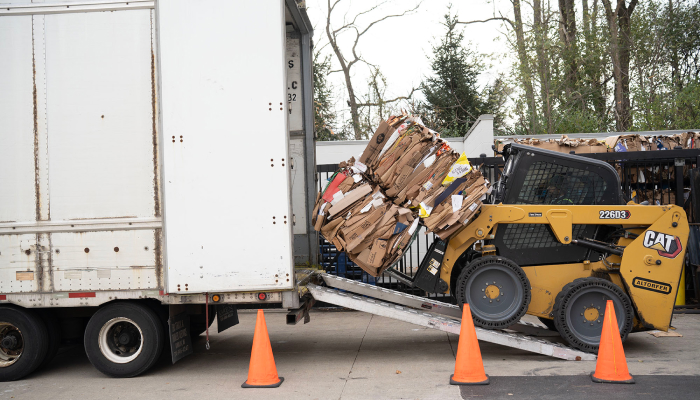
For large-volume operations, equipment such as balers and compactors can compress cardboard into compact bundles for you, improving storage and transportation efficiency.
Choosing the Right Recycling Solution
Not all recycling setups are the same. The right solution depends on your facility’s size, volume, and workflow.
When evaluating options for recycling in Salt Lake City, consider:
Pickup frequency
High-volume operations may need frequent collection to keep materials moving, so it's important to find a recycling partner who can match your requirements.
Material volume
The amount of cardboard generated will determine whether simple collection containers or equipment like balers and compactors are needed.
Space availability
Facilities with limited space may require compact solutions, while larger operations can support dedicated recycling areas.
Operational fit
Recycling should integrate smoothly into existing processes without slowing down productivity.
Selecting the right setup ensures that recycling supports your operation rather than complicating it.
Integrating Recycling Into Daily Operations
The most effective recycling systems are built into everyday workflows. When cardboard is handled consistently at each stage, it doesn't become a problem later.
Businesses can improve their approach to recycling in Salt Lake City by:
Sorting boxes and materials by type immediately after use
Keeping recycling stations close to work areas
Training employees on proper handling
Maintaining clean, organized collection zones
These habits help create a steady flow of materials from use to collection.
How Recycling Supports the Packaging Cycle
Cardboard recycling is part of a larger recycling ecosystem that keeps materials in use. When businesses recycle corrugated packaging, the fiber is recovered and reused to create new products.
This cycle includes:
Producing packaging from new, renewable fiber as well as recovered fiber
Using boxes to transport goods and conduct daily operations
Collecting and recycling used cardboard
Turning recovered fiber into new packaging again
By participating in recycling in Salt Lake City, businesses help support this ongoing, circular cycle and extend the life of renewable materials.
Building a Long-Term Recycling Strategy
Recycling bulk cardboard is not a one-time effort. It requires a system that works consistently over time and adapts as your business grows.
A strong recycling strategy helps businesses:
Maintain organized and efficient facilities
Manage high volumes of material
Reduce unnecessary waste
Support responsible resource use
For businesses in Salt Lake City, setting up a reliable recycling system ensures that cardboard is handled efficiently and contributes to a broader effort to keep materials in circulation.
Supporting Efficient Operations Through Recycling
Managing bulk cardboard does not have to be a challenge. With the right processes, equipment, and support in place, recycling becomes a seamless part of daily operations.
By focusing on consistency, reliability, accessibility, and proper handling, International Paper recycling solutions in Salt Lake City can help businesses stay organized, improve efficiency, and make the most of the materials they use every day.


